Dog Probiotic Chewables for Digestive Health — Honest Review

After three days of cleaned-up messes and a dog who wouldn’t eat, one small chewable tablet changed the entire trajectory of our week.
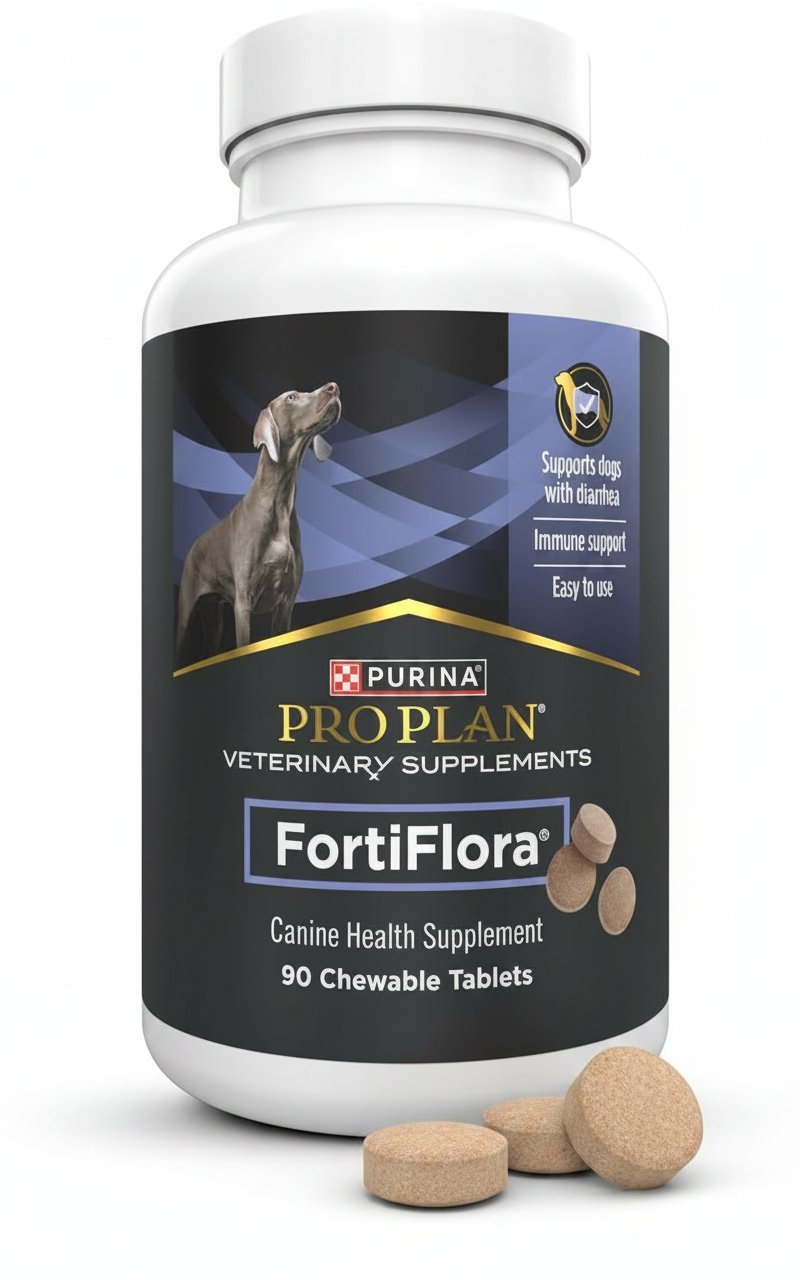
It started on a Wednesday morning, the kind where your socks are already wet before you’ve had coffee. My dog, Hector, a seven-year-old mixed breed with the digestive constitution of a nervous intern, had been through it. A new bag of kibble, a stolen corner of my daughter’s grilled cheese, and three days later I was mopping floors and Hector was doing that slow, apologetic walk he does when he knows something is wrong. That morning I decided I was done treating symptoms and needed to actually do something about gut health. That’s when I opened the 90-count canister of Purina Pro Plan Veterinary Supplements FortiFlora Daily Probiotics for Dogs, the chewable tablet format that my vet had mentioned twice and I’d nodded at twice without ever actually buying.

The First Time I Saw It
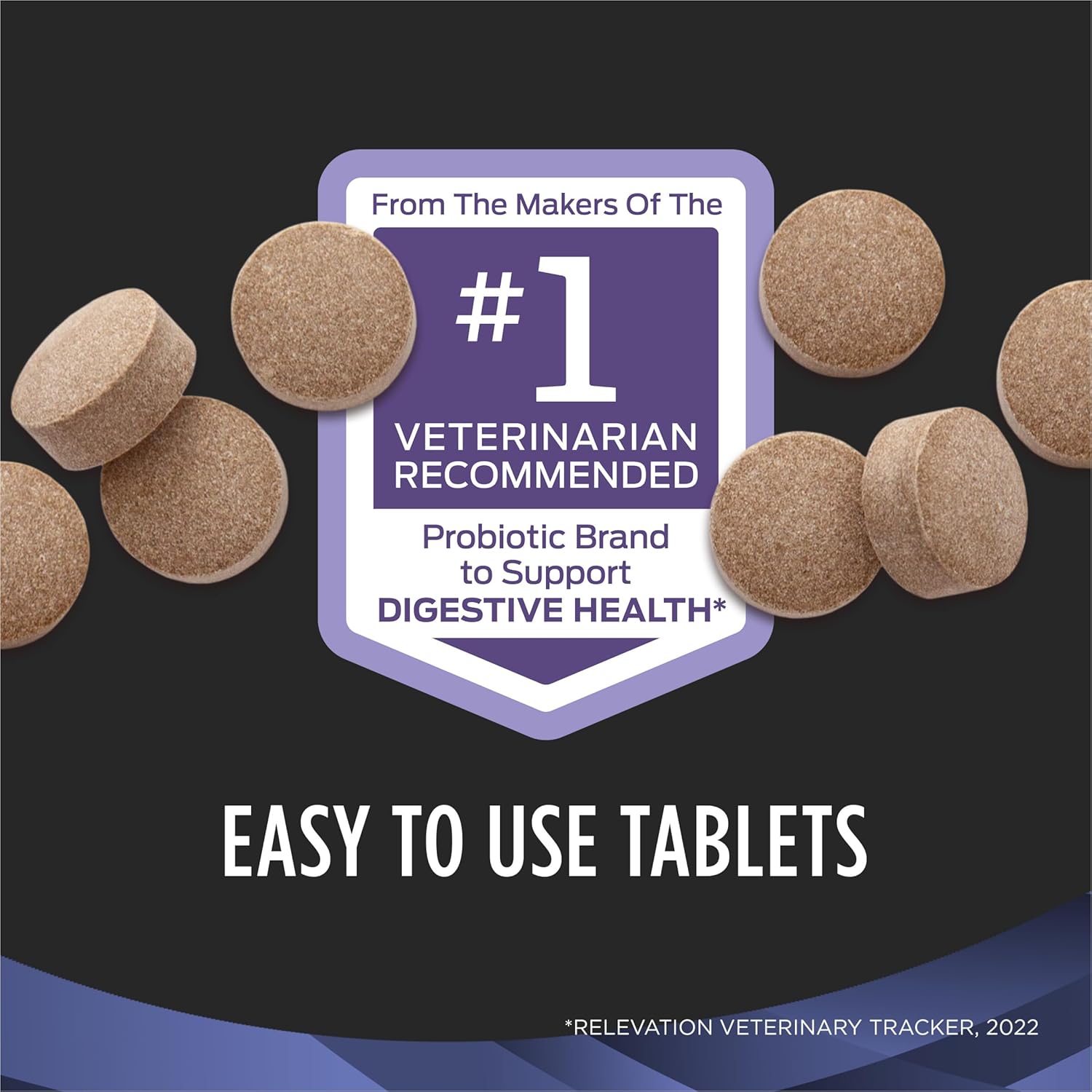
I’d been half-researching dog health supplements and daily vitamins for about six months before I finally committed. Every time I typed something into a search bar, I’d land on a wall of powders and capsules and “sprinkle on food” instructions that I knew, with full self-awareness, I would forget within a week. What stopped me on FortiFlora was the format: a chewable tablet that dogs actually want to eat, not something I’d need to hide inside a pill pocket or a glob of peanut butter.
The brand’s veterinary-diet reputation also carried weight. This isn’t a product from a startup with a good Instagram presence. Pro Plan Veterinary Diets is the kind of name that shows up in actual vet offices, and that matters to me more than clever packaging. I added it to my cart and, honestly, felt like I’d done something responsible for the first time in a while.
How It Actually Performs
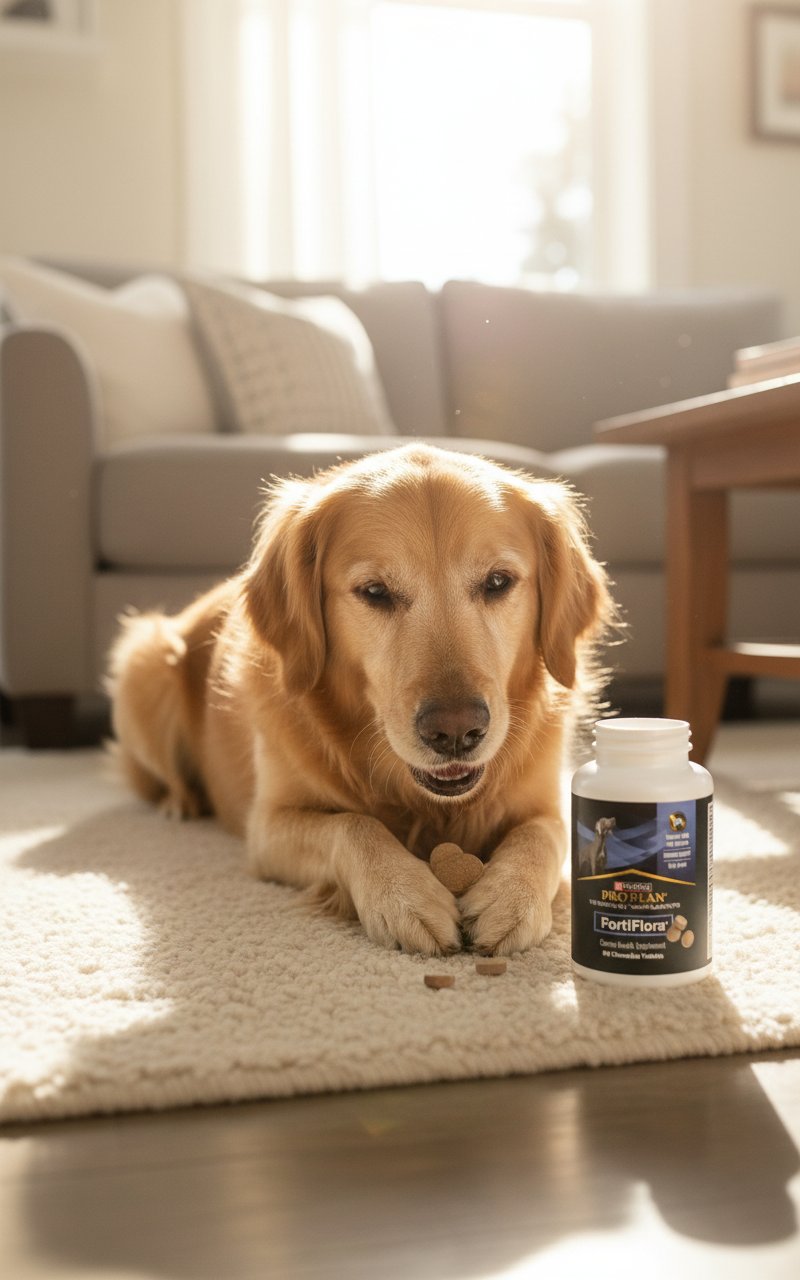
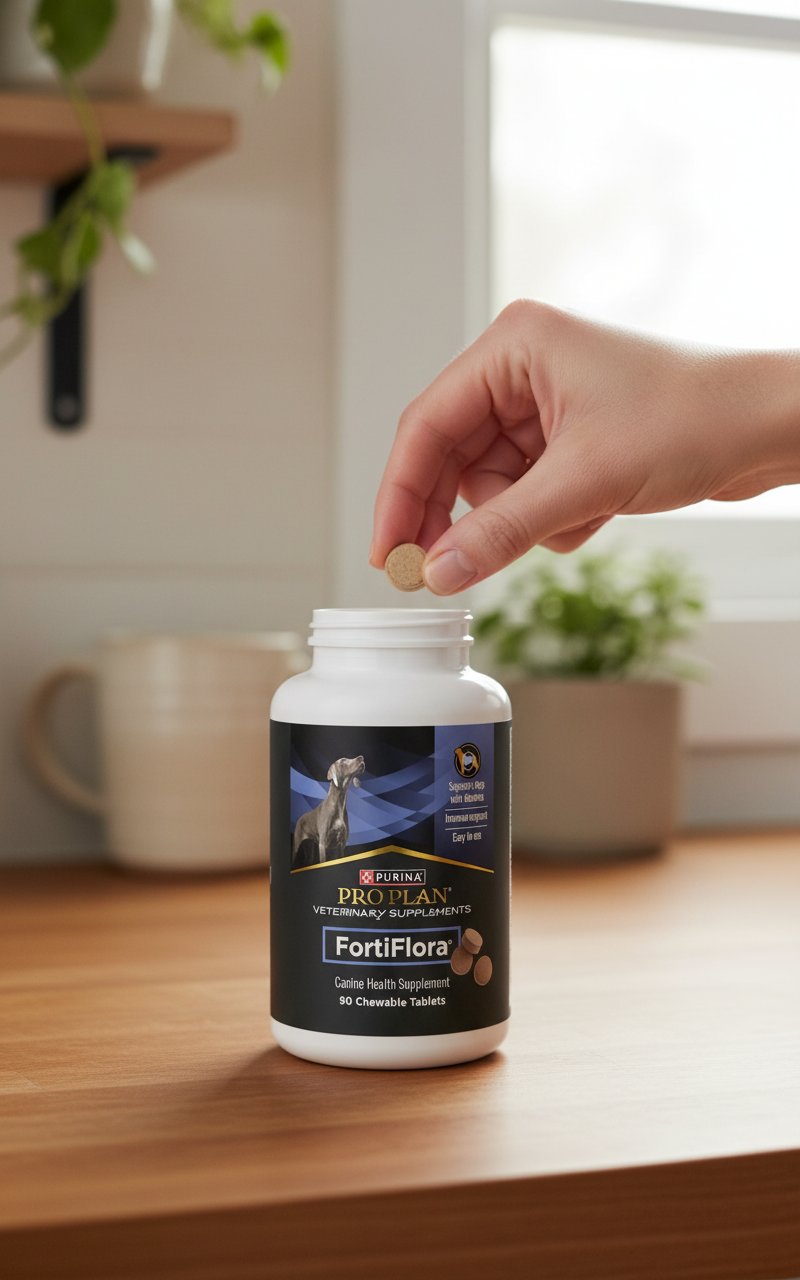
The tablets are small, liver-flavored, and Hector treats them the way he treats exactly nothing else in his supplement rotation: he sits for them voluntarily. Within the first four days of consistent daily use, his stools normalized. I know that’s not a glamorous thing to write, but it is the only metric that matters when you’re evaluating a probiotic supplement, and the improvement was clear enough that I texted my vet a photo. She was not as excited as I was, but she confirmed we were on the right track.
“A probiotic supplement that your dog actually wants to eat is, functionally, a completely different product than one he tolerates.”
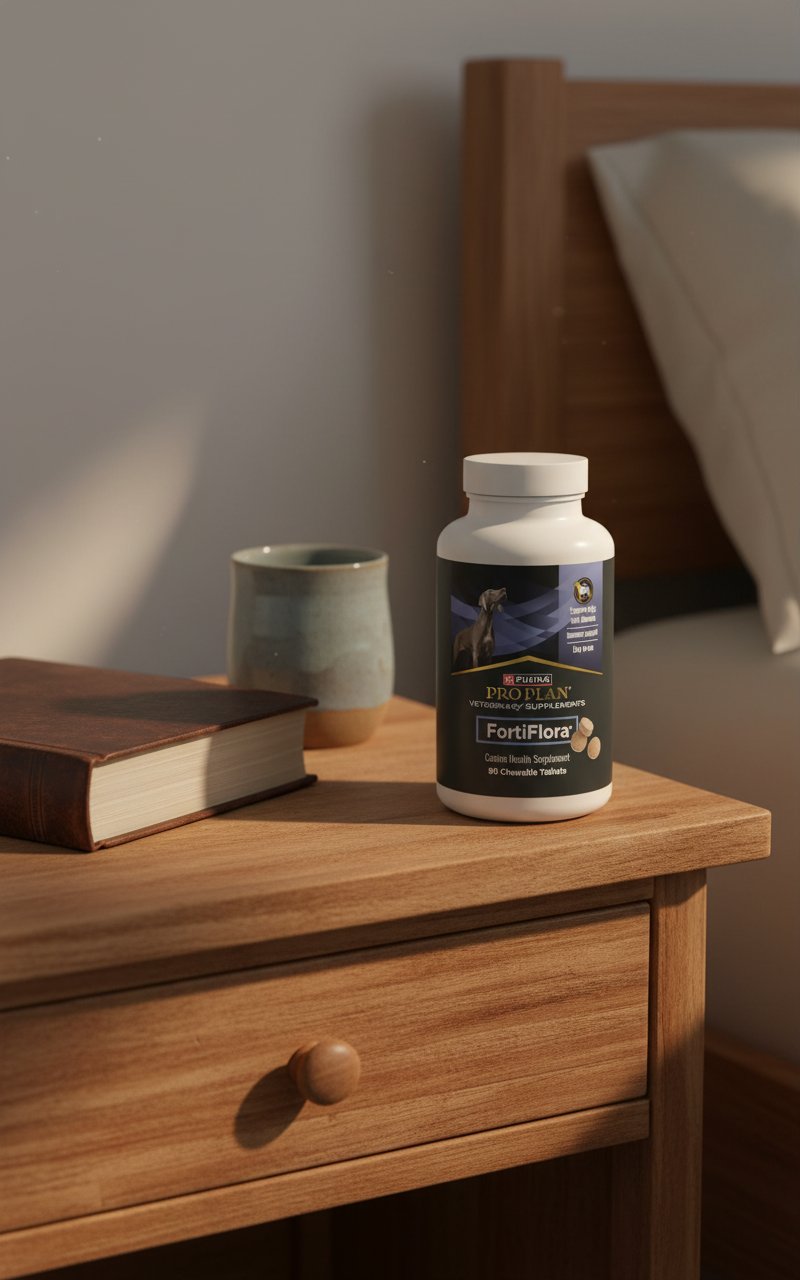
The canister itself is sturdy, seals well, and the tablet form means no measuring, no mess, no powder clinging to the inside of a scoop. One honest note: the tablets have a strong smell when you first open the container, which some owners might find off-putting even if their dogs find it irresistible. If you’re sensitive to that kind of thing, store the canister in a cabinet rather than on a counter. For more context on what makes a probiotic supplement clinically relevant for dogs, the AVMA’s pet owner resource center has solid foundational reading on gut health and when supplements are appropriate.
How I Actually Used It
Scenario 1: Post-Dietary Disruption Recovery
The first real test was exactly the situation that pushed me to buy this, Hector’s recovery from three days of digestive upset. I gave him one tablet each morning, right before his regular breakfast, and treated it as a non-negotiable part of the routine the way his flea prevention is. By day five, he was back to normal energy levels and interested in food again. Watching a dog go from low and uncomfortable to alert and hungry is a specific kind of relief that you don’t fully appreciate until you’ve been on the other side of it. By the end of the second week, I felt like we’d genuinely addressed something rather than just waited it out.
Scenario 2: Daily Maintenance for a Senior Dog’s Gut Health
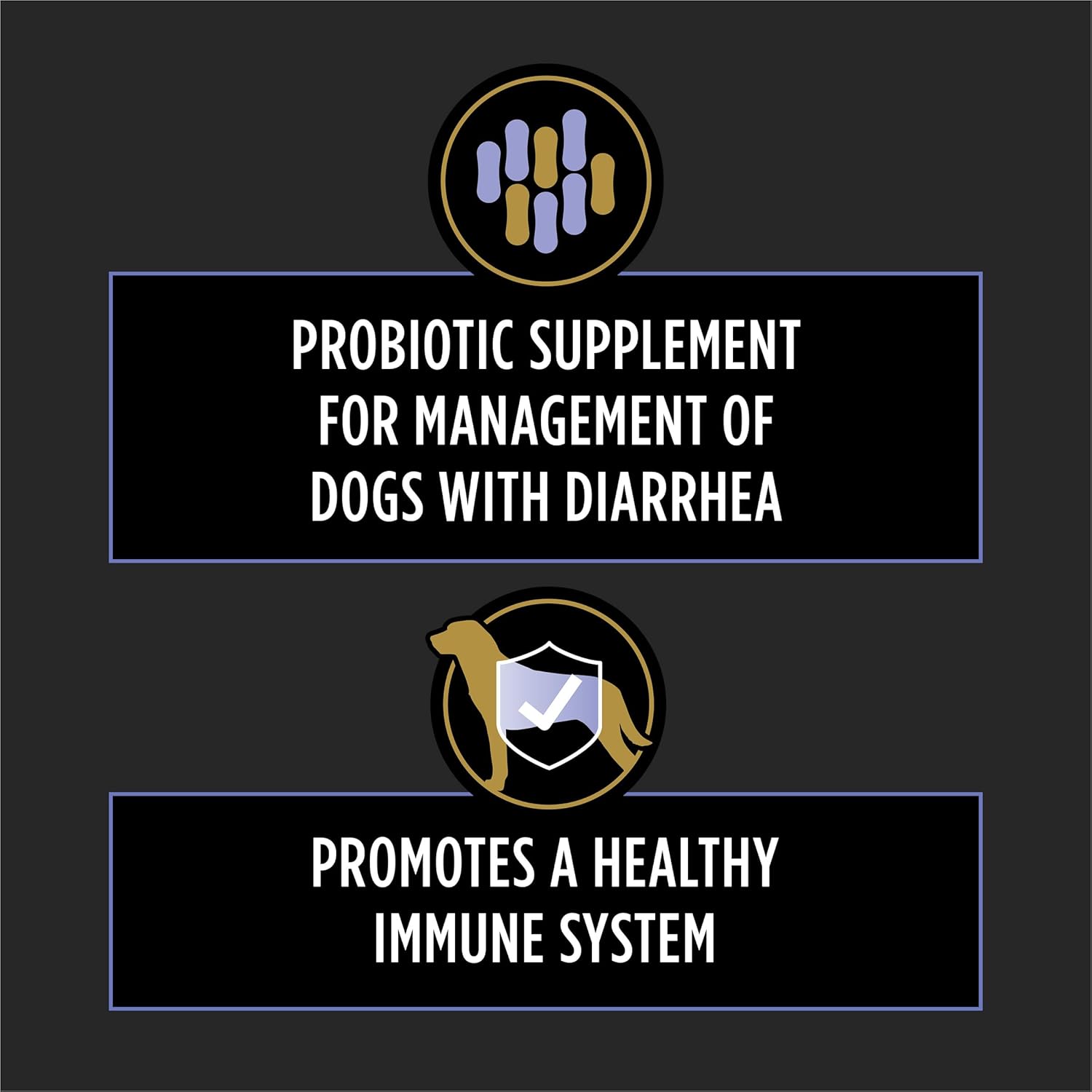
Once the immediate recovery phase passed, I kept Hector on the tablets as a daily ongoing wellness and health supplement rather than a situational fix. Senior dogs, and Hector qualifies at this point, deal with slower gut motility and more sensitivity to dietary changes than younger dogs, according to what I’d read in several AKC expert-advice deep dives on senior dog care. The 90-count canister works out to a three-month supply at one tablet per day, which is a genuinely practical interval for reordering. I set a reminder on my phone and haven’t let it lapse since.
Scenario 3: Introducing a New Food Without the Drama
In month two, I transitioned Hector to a new kibble formulation, something I’d been avoiding because the last time I switched foods we had a very bad week. This time, I kept the probiotic tablet daily throughout the two-week transition window and saw almost none of the usual soft-stool pattern that comes with food changes. I can’t claim it was entirely the FortiFlora, because I also did the transition more slowly than I had previously. But the combination of intentional pacing and consistent probiotic support made the whole thing dramatically less stressful for both of us.
What Other Owners Are Saying
This product carries a 4.7 rating across more than two thousand reviews, which is a number that’s hard to manufacture or sustain with a mediocre product. The pattern in what owners describe is consistent: dogs who previously refused supplements eat the tablets willingly, and the digestive results tend to show within the first week of daily use.
The outliers in the negative reviews tend to cluster around dogs with more complex GI conditions, which is less a product failure than a mismatch between a daily maintenance probiotic supplement and a situation that requires veterinary intervention. That’s a meaningful distinction.
Who Should Skip It
If your dog has a diagnosed inflammatory bowel condition, a protein allergy flagged by a vet, or a chronic GI issue that hasn’t responded to conventional treatment, a daily over-the-counter probiotic supplement is not a substitute for a clinical plan. This product is built for digestive support and general gut-balance maintenance, not for managing serious GI disease. Dogs who are already on a veterinarian-prescribed probiotic protocol probably don’t need a second product layered on top without professional guidance. And if you have a very small dog, check with your vet on tablet dosing, since the one-size approach works for most adult and senior dogs but warrants a quick confirmation on the smaller end of the weight spectrum. If you’re exploring other joint-support and mobility supplements for a senior dog alongside gut health, it’s worth mapping out a full supplement plan with your vet before stacking multiple daily products.
What It Replaces in My Setup
Before FortiFlora, I was relying on plain canned pumpkin during upset-stomach episodes, which is a fine short-term fix but not a sustainable daily strategy and not something Hector was ever particularly thrilled about. I also tried two different powder probiotics that required measuring with a little scoop and mixing into food, and I will tell you honestly that my consistency with those was poor. The shift to a chewable tablet that Hector treats as a reward rather than a medicine changed everything about how reliably I actually administer it. A product that requires no negotiation, no hiding, and no mess is one I actually use every day, and that consistency is what makes a probiotic supplement work in the first place.
If you’re looking for a broader view of what’s worth keeping in your dog’s daily wellness rotation, explore our editor’s curated pet-product recommendations for a full picture. And if a dog owner in your life is dealing with similar GI challenges, this is honestly one of the more thoughtful things you could put on a practical pet gift guide.
FAQ
Is FortiFlora appropriate for both adult and senior dogs?
Yes. The tablet is formulated for daily use in adult and senior dogs, and the once-daily dosing works across most size ranges. If you have a dog on the smaller end of the adult spectrum, confirm the dose with your vet at your next visit.
Are the ingredients and materials safe for daily, long-term use?
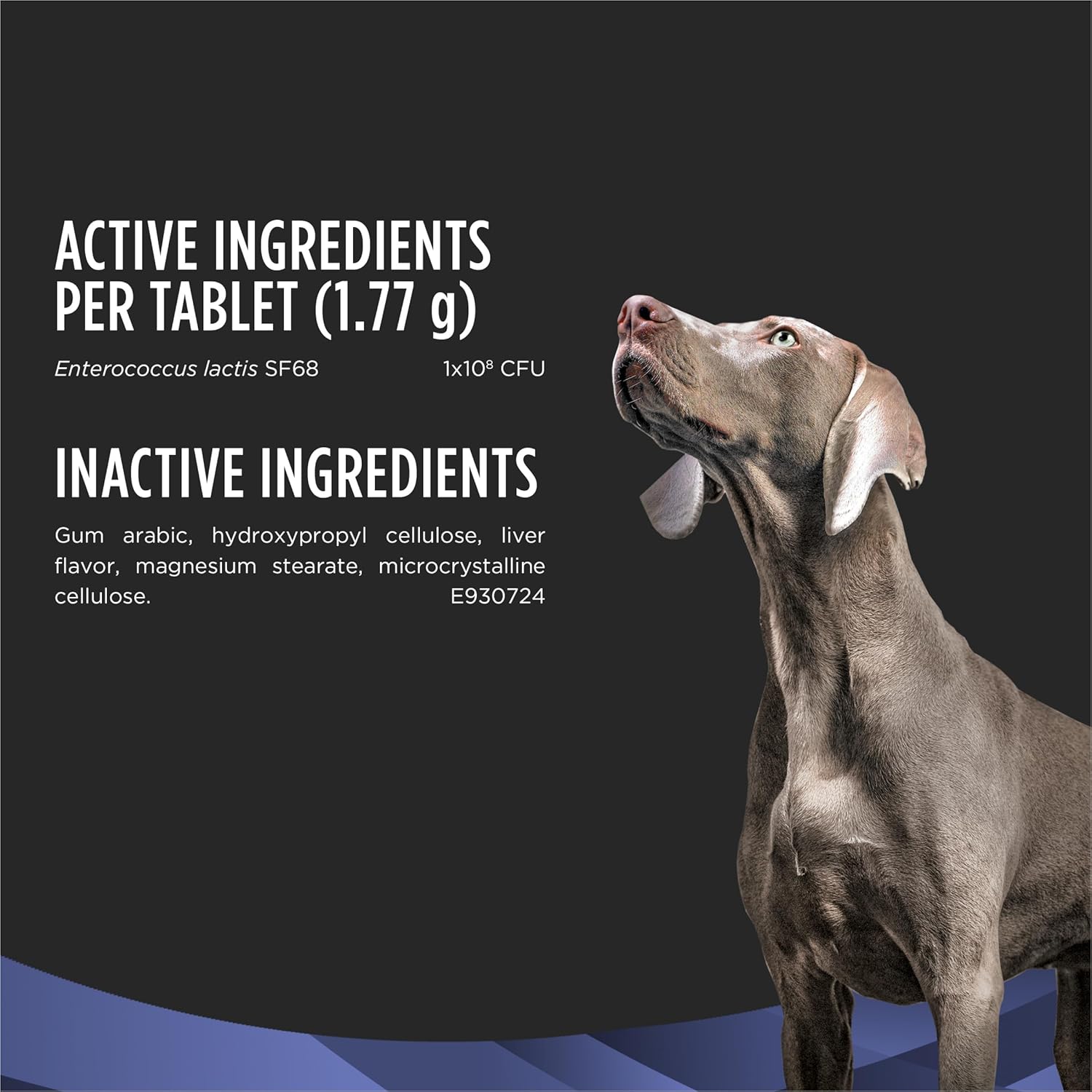
FortiFlora has been through clinical evaluation and is sold through veterinary channels, which is a higher bar than general-market supplements. The active probiotic strain, Enterococcus faecium SF68, has published research supporting its use in dogs. As with any supplement, if your dog develops any new symptoms after starting, flag it with your vet.
Can I use this during an antibiotic course?
Many vets recommend probiotic supplements during and after antibiotic treatment to help restore gut flora, but you should space the tablet and the antibiotic apart by at least two hours. Ask your vet for specific timing guidance based on your dog’s prescription.
Does the build quality and formulation match what you’d expect from a veterinary-grade brand?
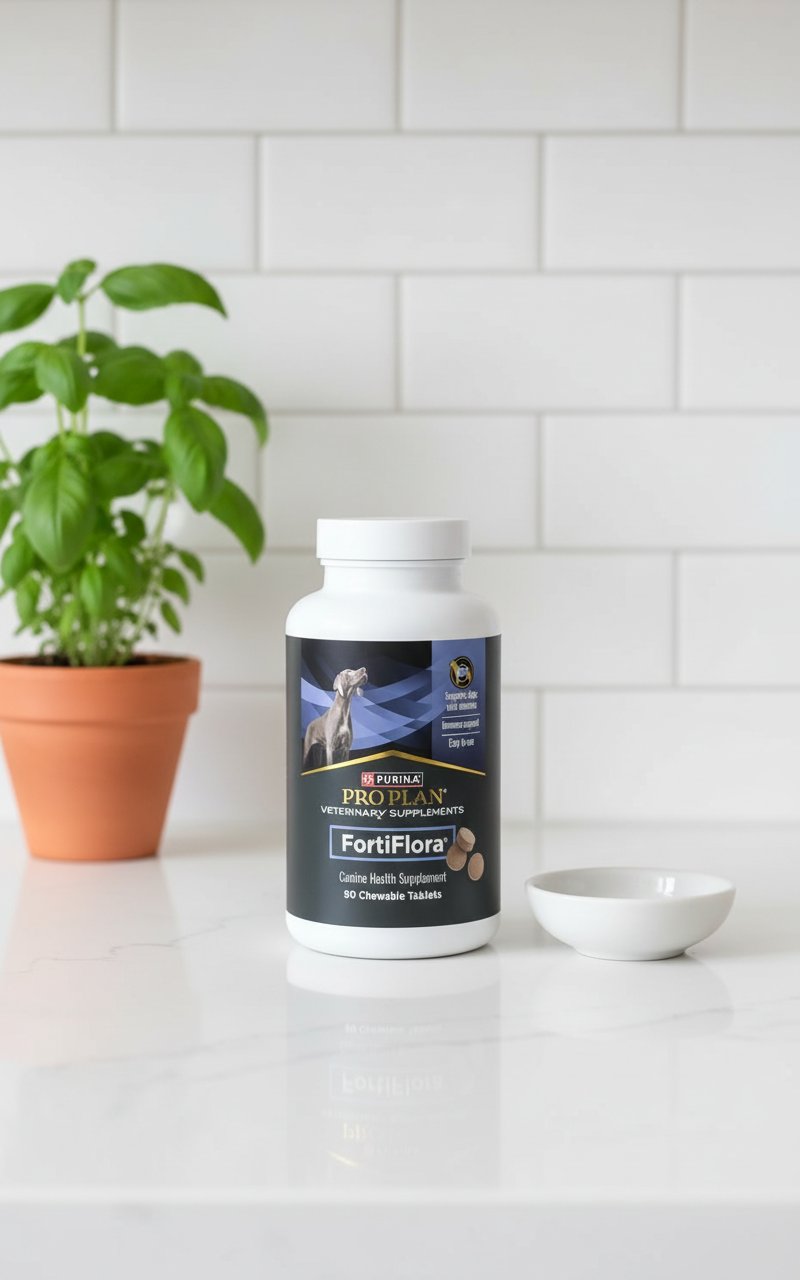
The short answer is yes. The tablet form is consistent, the canister construction is solid, and the fact that this product is distributed through veterinary offices rather than just general retail gives it a level of formulation accountability that cheaper alternatives don’t carry. For what you’re paying, the value reads above what you’d expect from a supplement in this tier.
What’s the return or satisfaction policy?
Policies vary by retailer, but most major pet-supply retailers carry a satisfaction guarantee on supplements. If you buy directly through a veterinary distributor, confirm their return window before purchasing the 90-count canister for the first time.

The Verdict
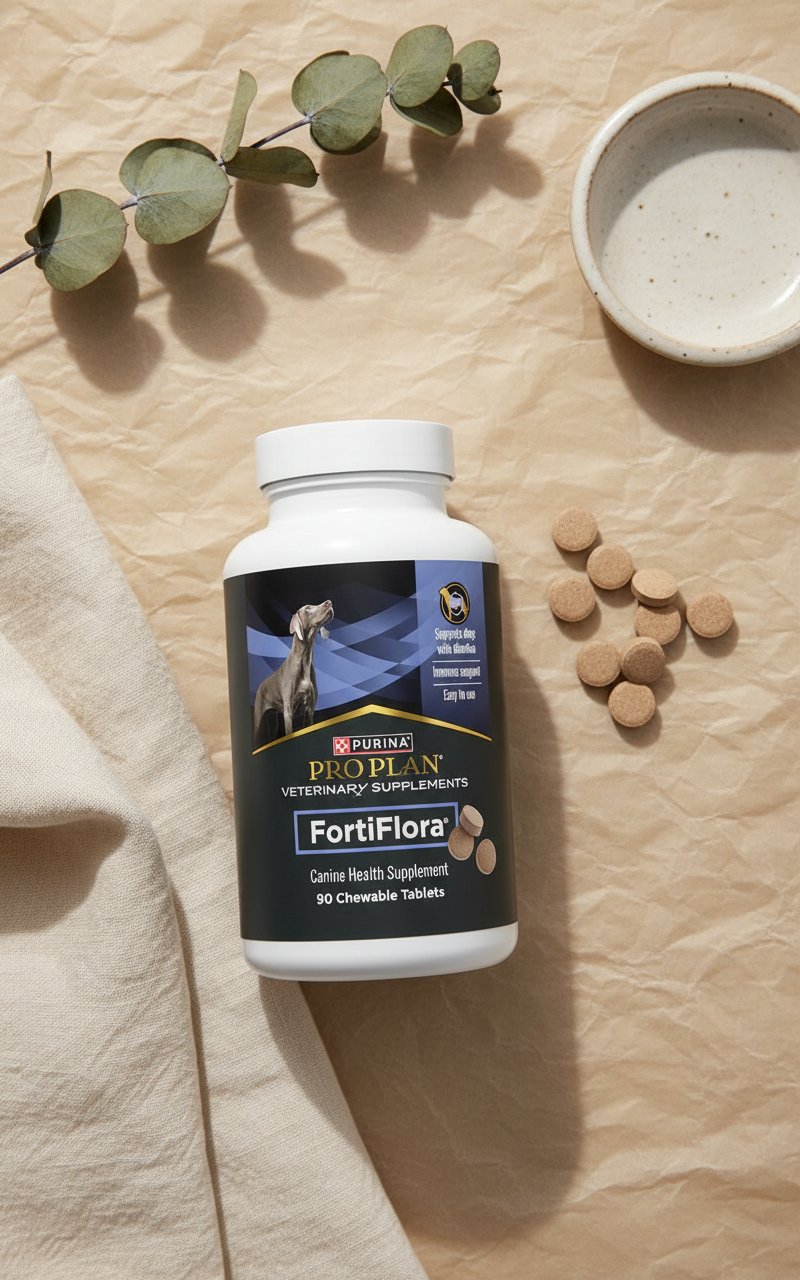
Three months in, Hector’s tablet comes out of the canister every morning before his kibble, and he sits without being asked. That’s not a trained behavior. That’s a dog who has decided this particular part of the routine is good. The Purina Pro Plan Veterinary Supplements FortiFlora Daily Probiotics for Dogs has become the one supplement in my cabinet that I feel confident I’ll actually maintain long-term, not because it’s convenient, though it is, but because it visibly works and my dog cooperates with it. For adult and senior dogs dealing with digestive inconsistency, sensitivity to food changes, or the general gut fragility that comes with age, this probiotic supplement delivers in a format that removes every excuse for skipping a dose. If you want more context on how calming and stress-related supplements interact with gut health in anxious dogs, that’s worth exploring alongside this, since the gut-brain connection in dogs is real and increasingly well-documented. At this price point, for a three-month supply of a veterinary-grade daily probiotic, the value is straightforward. If your dog’s gut has been working against you, this is the place to start.
Every Angle
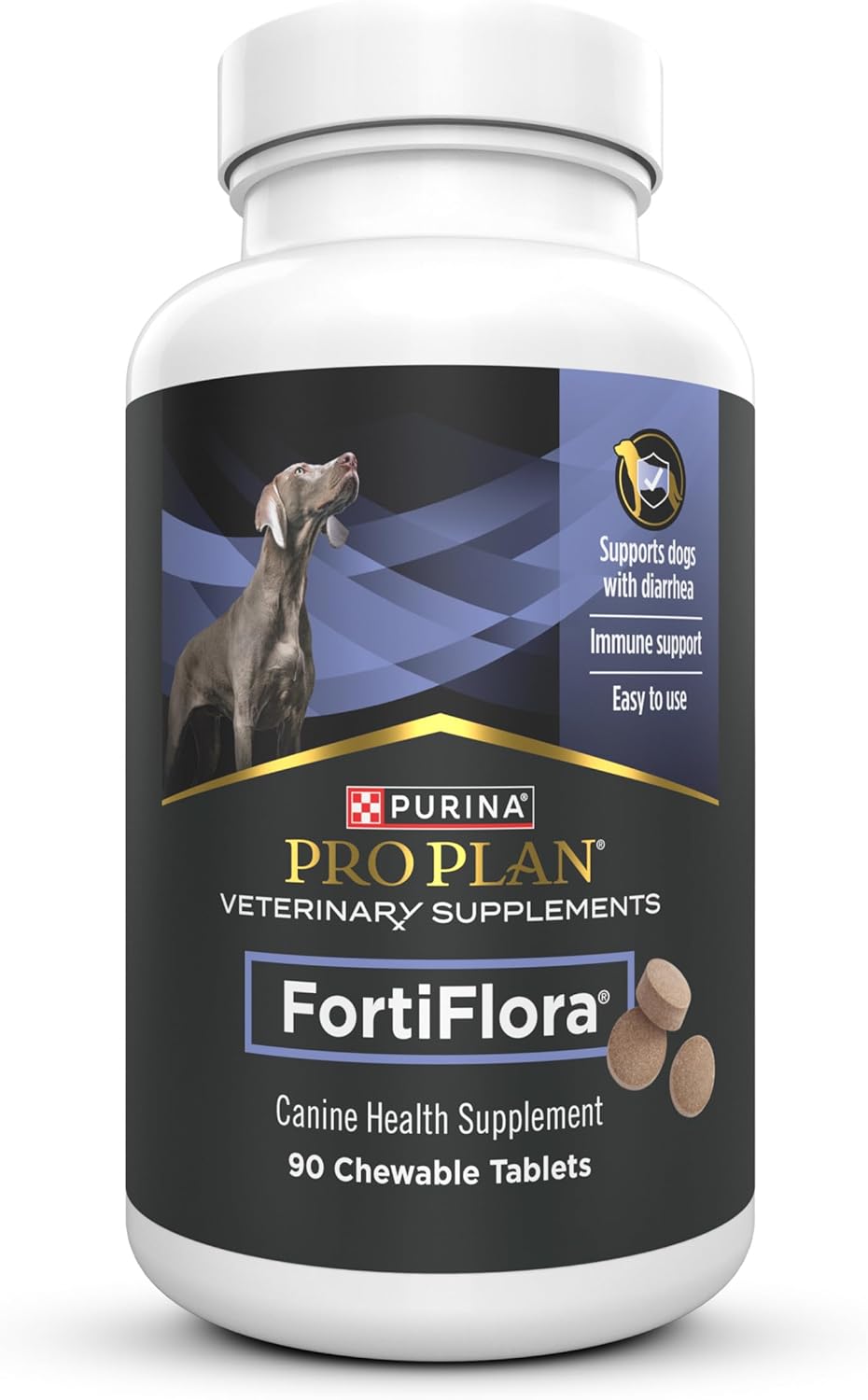
The product as photographed for Amazon — front, side, back, detail.

As an Amazon Associate I earn from qualifying purchases.